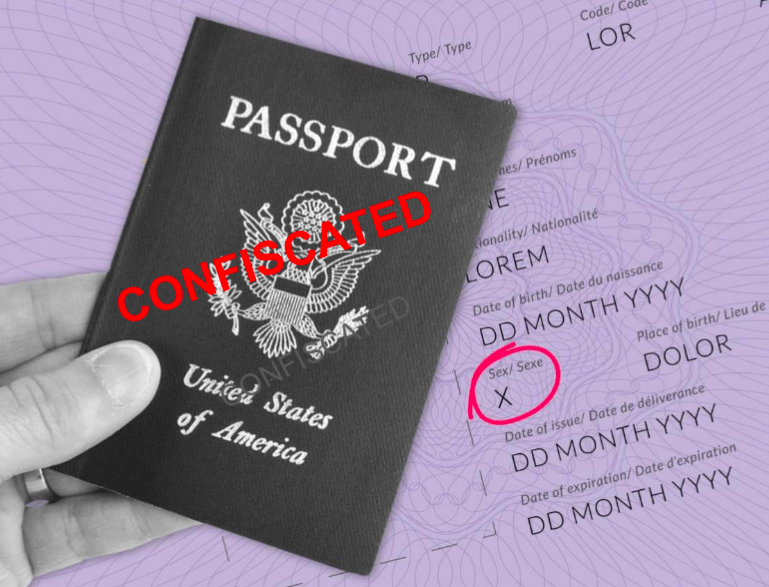
This info sheet may be of particular interest to US passport holders who are transgender or nonbinary and face passport confiscation when leaving the US at a port of entry.
A person can enter Canada at a port of entry even if they did not leave another country through an official port of entry.
However, their admissibility will be assessed by a Canada Border Services Agency (CBSA) officer based on various factors, including their travel history, documentation, and compliance with Canadian immigration laws.Key considerations include:
Key considerations include:
Documentation: The individual must have valid travel documents (passport, visa, or eTA if required).Legal Status: If they left another country irregularly or without a proper exit record, Canadian authorities may scrutinize their entry more closely.
Legal Status: If they left another country irregularly or without a proper exit record, Canadian authorities may scrutinize their entry more closely.
Border Security & Immigration Concerns: If there are security, legal, or immigration violations associated with their irregular departure, they could face questioning, delays, or even inadmissibility.
Refugee or Asylum Claims: If the person is seeking asylum, they must present themselves at a designated port of entry and may be subject to additional screening under Canadian refugee laws.
New border control measures:
Canada has recently implemented several measures to enhance border security:
- $1.3 Billion Border Plan: In December 2024, the Canadian government announced a comprehensive plan to bolster border security. This initiative includes deploying additional personnel, advanced surveillance technologies such as drones and sensors, and increased intelligence sharing with U.S. authorities to combat issues like fentanyl trafficking and irregular migration.
- Appointment of a Fentanyl Czar: To address the opioid crisis, Canada has appointed a Fentanyl Czar responsible for coordinating efforts against fentanyl production and distribution. This role involves direct collaboration with U.S. law enforcement to dismantle trafficking networks.
- Enhanced Immigration Measures: The government has amended immigration laws to prevent practices such as “flagpoling,” where individuals briefly exit and re-enter Canada to expedite immigration processes. This change aims to reduce resource strain and improve border efficiency.
These initiatives reflect Canada’s commitment to strengthening border security and addressing transnational challenges collaboratively with the US which has been pressing Canadian officials to address concerns related to the border.
More info: Getting to safety in Canada when LGBT+
Even more info: If you know someone who would like guidance on a specific situation, do not hesitate to reach out to the Morgane Oger Foundation…they have relevant knowledge, but have limited resources.
 Morgane Oger
Leave a comment