By Morgane Oger | April 2025
Across the globe, an old lie is resurfacing: that inclusion threatens society. This fear feeds “replacement theory”—the baseless notion that elevating marginalized people harms the majority. It frames progress as a zero-sum loss for culture and identity. The far-right fuels fears trying to win votes using this narrative to target immigrants, gender minorities, queer people, and women who defy patriarchal norms. Their well-worn script borrows from 20th-century fascism.
One of its ugliest tools is bioessentialism—the belief that traits like sex or gender are fixed by a simple interpretation of biology that should be leveraged to legislate exclusion. Once used to justify racism, sexism, and religious discrimination, bioessentialism now drives efforts to strip trans people of rights and recognition.
It insists that privilege belongs to some and protections are denied to others, based solely on biological aspects enshrined in legislation. But in democracies founded on human rights, law exists to protect people from such discrimination, not to enshrine it.
We’ve dismantled this before.
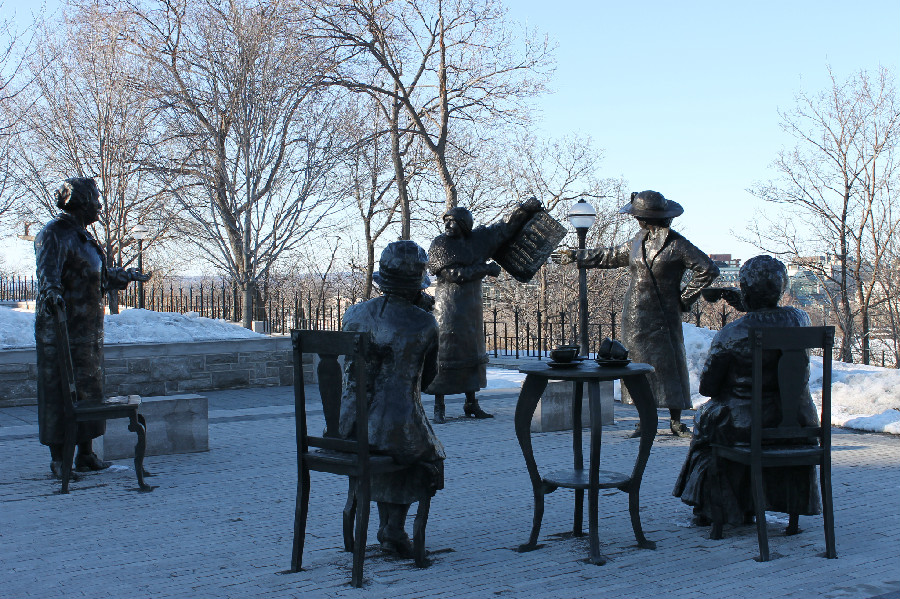
In Canada’s 1929 Persons Case, five women overturned a law barring women from the Senate because of their sex, which excluded them from legal personhood. Ultimately, the final ruling affirmed that women, regardless of anatomy, are in fact persons under the law.
Yet the logic of biological gatekeeping keeps popping up.
In Canada, bioessentialism is often repackaged as “parental rights” and “gender-critical feminism.” These campaigns ignore the safety of trans youth, enforcing rigid gender norms in schools, healthcare, and law. They don’t protect families—they control who gets to live authentically.
Courts worldwide have long resisted bioessentialist arguments. In United States v. Virginia (1996), Justice Ruth Bader Ginsburg rejected gender-based exclusion, reinforcing that legal equality cannot rest on outdated notions of sex. In Canada, Oger v. Whatcott (2019) affirmed that human rights protections hinge on gender identity, not anatomy. In Forstater v. CGD Europe (2021), the UK Employment Tribunal acknowledged that gender-critical beliefs are protected as philosophical convictions—but crucially, this does not justify discrimination against transgender people.
Yet in April 2025, the UK Supreme Court broke from this trajectory. It ruled that under the Equality Act 2010, “woman” refers solely to biological sex, sidelining transgender women from legal protections in single-sex spaces. This decision contradicts evolving human rights standards and places the UK at odds with European Court of Human Rights (ECHR) jurisprudence, which upholds that gender identity falls within the scope of private life protections under Article 8 of the European Convention on Human Rights.
As I wrote when the UK ruling was released, biologically defining sex is a dangerous regression. Such a decision risks reinvigorating anti-trans sentiment and women’s vulnerability overall. The UK ruling resurrects the same exclusionary logic that the Persons Case and decades of human rights advancements sought to overcome. By enshrining bioessentialism into law, the UK jeopardizes transgender people’s safety, dignity, and the broader pursuit of gender equality.
The gender-critical movement increasingly demands policies that erase trans people from law, healthcare, and public life, portraying trans existence as a threat to women and children. These dangerous tropes fuel stigma, violence, and fear.
I am a trans woman and a repeat newcomer to communities, my experiences have led me to seen how easily difference can be framed as a danger by voices resisting change. Calls to “protect” too often become calls to exclude.
Globally, the backlash against sex and gender minorities is fierce. Uganda’s 2023 Anti-Homosexuality Act, U.S. executive orders, Hungarian and Russian so-called lgbt propaganda laws, and UK healthcare rollbacks follow the same script: paint LGBTQ+ people as threats, then legislate their erasure.
The result? Arrests, abuse, and the stripping away of fundamental rights.
In Canada, these ideas are increasingly drifting away from the fringe. Populist Conservative leaders have been fanning the flames of discontentment with bioessentialist rhetoric.

On January 22, 2025 Pierre Poilievre declared that he recognizes “only two genders.” His 2025 campaign platform even goes so far as to define womanhood by sex assigned at birth and to go after so-called “woke” ideas (like Trump is doing). In it Poilievre pledges to do away with protections from discrimination based on gender identity or sexual orientation. He erases gender diversity, and ignores the existence of 2SLGBT Canadians – emboldening attacks on safety measures meant to protect us all.
Worryingly, Poilievre’s stance emulates Donald Trump’s second-term agenda. Since January 20, Trump has banned trans people from the military, restricted trans participation in sports, and redefined legal gender as fixed at conception, effectively erasing transgender Americans. The Trump administration has also scrubbed LGBTQ+ content from federal websites.
In response, Canada’s March 2025 travel advisory warns 2SLGBTQI+ travellers of increased risks when visiting the U.S., including passport restrictions and heightened border scrutiny.
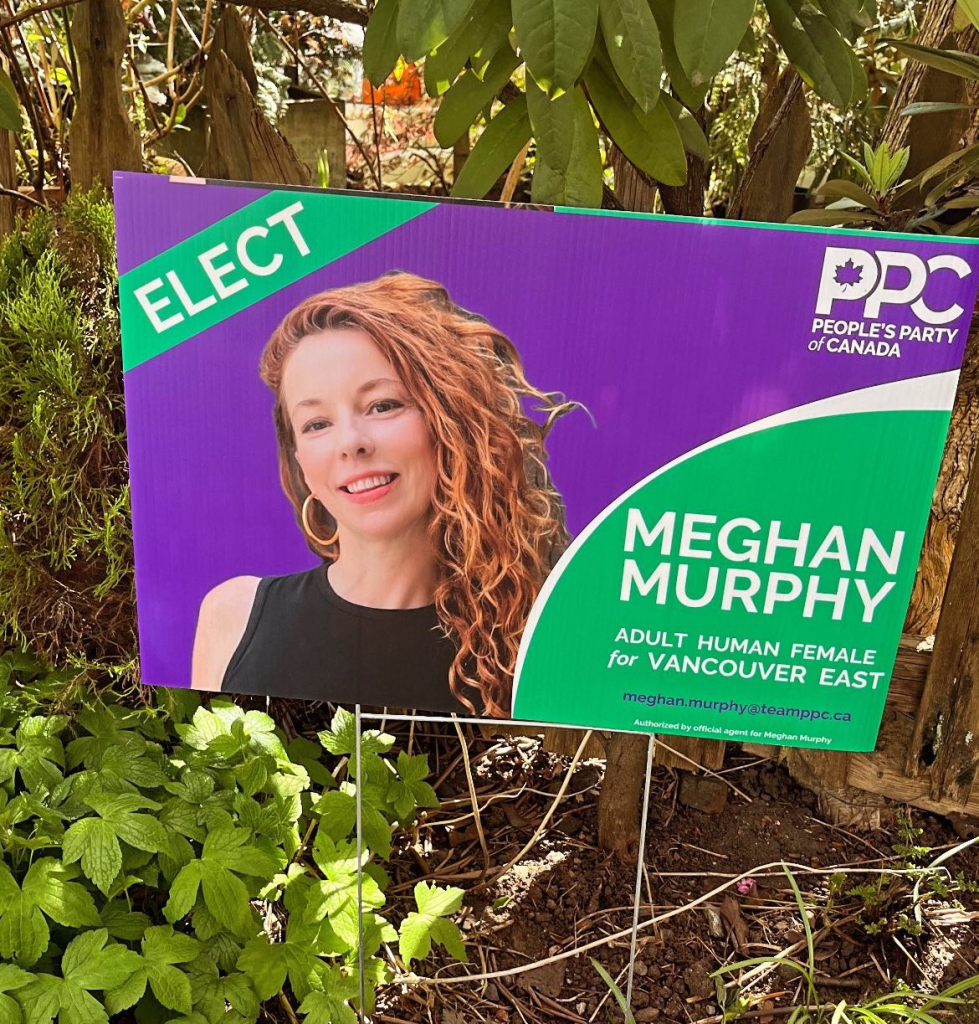
Closer to my home in BC, Meghan Murphy, founder of the gender-critical website Feminist Current and reknown “gender-critical” (transphobic) voice, is running for the far-right People’s Party of Canada in Vancouver East.
Murphy pledges to repeal Bill C-16 and ban trans-inclusive policies. The PPC’s alignment with white nationalism and religious extremism amplifies the threat.
But this exclusionary rhetoric isn’t limited to the right. In 2024, I resigned from the board of Atira Women’s Resource Society after facing backlash for speaking out against protests that targeted Jews during Vancouver Pride that year. The silence from progressives reminded me that dogma can fester anywhere, and how otherwise decent people have blind spots when it comes to inclusion and diversity.
These aren’t isolated incidents. They are part of a global backlash against pluralism, cloaked in nationalism, religion, ideology, even feminism. At its core, this movement defines who counts and excludes the rest. When empowered to legislate, it locks in its views through legislation and regulation that normalize limiting rights because of who you are, tearing down protections from discrimination because of personal characteristics. The policies typically begin with easy targets short of sympathy in society: prison inmates convicted of loathsome acts, individual whose actions are troublesome, women who crossed one patriarchy’s boundaries, and others lacking full agency – refugees, children, persons accessing social services that strip dignity, or marginalized individuals facing law enforcement.
Canada conveniently allows the notwithstanding clause to be used to enable otherwise prohibited discrimination. This has already been used in Alberta to target transgender children.
Democracy can’t survive these populist attacks on inclusion and diversity if voters allow them.
In Canada inclusion is not a privilege but a right that must be protected. Upholding it means rejecting purity tests based on biology or on any other personal characteristic. It means rejecting governments using the notwithstanding clause to use discrimination against easy targets as a pry bar against the rest of us.
Protecting inclusion means standing with trans people, with women or anyone who needs to terminate a pregnancy, and with everyone under attack because of who they are.
Not everyone who excludes others is far-right. But everyone who includes others strengthens the very democracy that protects us all. An inclusive Canada isn’t just possible. It’s necessary and you can push back to help protect it. Perhaps reflect on what exclusion means to you and how you might have unknowingly allowed bioessentialist ideas to get the better of you.
Ask yourself what one action you could take, big or small, to support someone facing this latest push meant to slide our country down the slipper slope towards that awful past where women weren’t even persons in Canada.
Morgane Oger is a transgender mom who is finishing raising her brood in BC. A human rights advocate and founder of the Morgane Oger Foundation. She may be found aboard SENA II, writing away in a safe harbour on Canada’s Salish Sea.
 Morgane Oger
Leave a comment