By Morgane Oger
April 24, 2025
I wrote this piece hoping activists, organizers, educators, and engaged citizens committed to justice will hear my concerns about the line between critique and hate. It’s important we all ensure our efforts to bring change for the better do not perpetuate the same patterns of exclusion we oppose.
Each year on Yom HaShoah, Holocaust Remembrance Day, we honour the six million Jews and millions of others murdered by the Nazi regime between 1933 and 1945. This act of remembrance calls us not only to mourn but to remain vigilant against the ideologies and prejudices that led to such atrocities. The Holocaust teaches us that hatred, when normalized, escalates from rhetoric to violence—and that lesson remains tragically relevant.
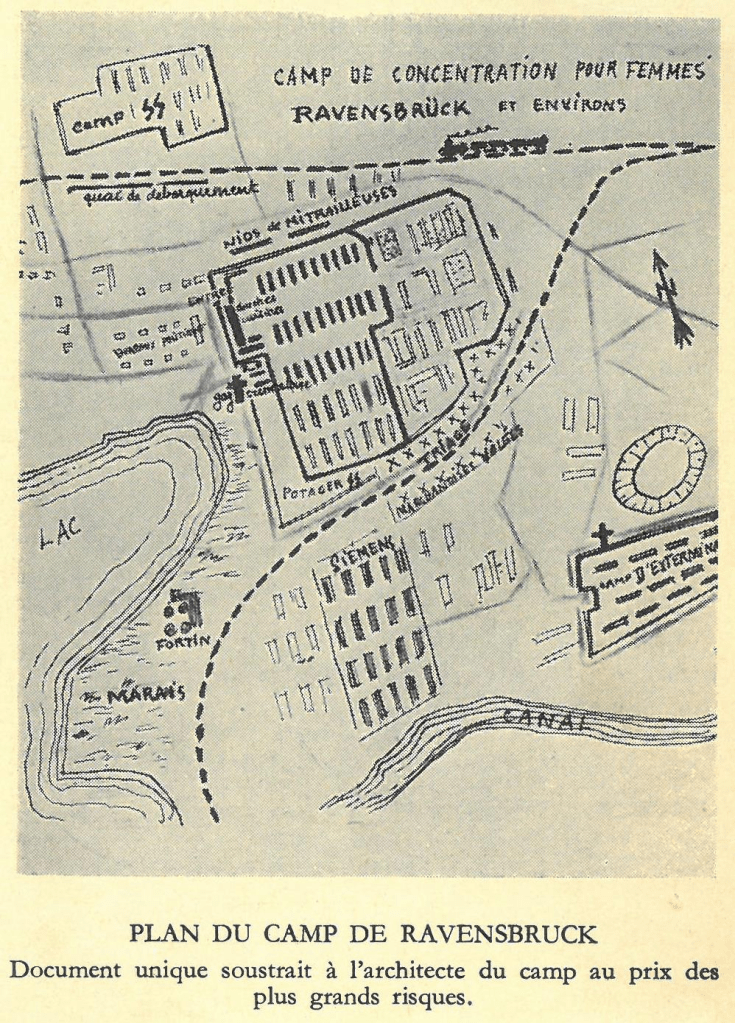
Today, in Canada and around the world, antisemitism and identity-based hatred persist. This hatred is often masked as political discourse, particularly through anti-Zionism that crosses the line into antisemitism. In my human rights advocacy work, I’ve also noticed similar patterns between anti-Jewish and anti-transgender voices. Both too often allow criticism of policies or ideas to seamlessly morph into an attack on the right to even exist at all. This is a blind spot that resurfaces when well meaning people take shortcuts in their communications.
On this Yom HaShoah, I hope you will join me in reflection on these parallels and recommit to opposing all forms of exclusion.
Criticism of Policy vs. Targeting Identity
It is essential to distinguish between criticizing the policies of a government and targeting people for their identity. Criticism of Israel’s government is legitimate, as criticism of any government should be. However, when that criticism morphs into hatred toward Jewish people collectively, it perpetuates the same exclusionary logic that fueled the Holocaust.
Consider Sean Orr, a Vancouver columnist and musician who, before his election to Vancouver City Council in April 2025, posted dehumanizing social media content. He justified violence against Israeli civilians during the horrific October 7, 2023 Hamas attacks and openly supported Israel’s destruction.
Orr also made jokes invoking harmful antisemitic stereotypes, including the statement, “they are all settlers,” which dehumanized victims, children among them, and rationalized terror. This is not legitimate critique, nor is it satire. It is the normalization of hatred disguised as activism, echoing the very rhetoric history has taught us to reject.
The Caryma Sa’d incident further illustrates this. In 2024 Sa’d, an Ontario lawyer, publicly posted images of Jewish-owned businesses and the home of Bernie Farber, head of the Canadian Anti-Hate Network, because of a legal dispute. A Law Society of Ontario investigation determined she engaged in discriminatory conduct, targeting Jewish identity rather than addressing policies or actions. This crossed the line from legitimate activism to identity-based harassment.
Similarly, Ofra Sixto, the Israeli-Canadian owner of Ofra’s Kitchen in Vancouver, began facing escalating hate speech and threats after displaying an Israeli flag in her restaurant and expressing support for her country after the October 7 attacks. Despite her inclusive stance, the sustained hostility forced her to close her restaurant in 2024. This chilling example underscores how expressions of Jewish identity are still met with hostility here in Canada.
Historical Lessons and Modern Parallels
The Holocaust was the culmination of centuries of antisemitism. The Nazis did not begin with gas chambers—they began with rhetoric, exclusion, and the dehumanization of Jews. Transgender and queer people were among those targeted, imprisoned, and killed by the Nazi regime. It is not lost on me that after the war Germany continued persecuting LGBTQ+ people under the same Nazi-era laws, while Jewish survivors struggled to rebuild their lives in Europe’s ruins amidst continued prejudice throughout a continent where so many of their neighbours had more than tolerated the genocide that Nazi Germany executed.
The patterns of dehumanization, scapegoating, and exclusion endure today. Anti-Zionism, when it denies the Jewish right to self-determination, invokes the same genocidal rhetoric that Arab leaders, from Haj Amin al-Husseini to Iran’s current regime, have used to justify calls for Israel’s destruction. It is not about borders or policies but denying Jewish existence.
This mirrors how trans-exclusionary ideologies challenge not just trans rights, but the very legitimacy of trans identities. These narratives, like antisemitic ones, reduce individuals to stereotypes and justify their marginalization or erasure.
The Moral Imperative of Protesting With Care
It is never acceptable to make individuals or vulnerable communities fear for their safety because of protests or activism.
A rule of thumb I try to follow in my own advocacy is to never be the monster:
When protesting actions you feel are so harmful that they are worth protesting, it’s better if you aren’t yourself the monster that day.
Do not target schools, community hubs, care providers, or places where families gather. Never target vulnerable people, and never be the scary one in a debate.
There are spaces meant for safety and inclusion, and the one who brings fear to those spaces is the one who is wrong. While in extraordinary circumstances there may be space for asymmetric resistance to large scale agents of harm such as oppressive systems or groups inciting hatred against vulnerable people, this work is not the place for unguided and inexperienced allies. And this wrk must never be executed against vulnerable persons or persons who have no say in what is happening.
It is never appropriate to incite hatred against people because of who they are. Ethical protest targets actions, policies, or entities—never individuals or communities based on their identity.
Stoking Stochastic Terrorism
In Canada, antisemitic incidents surged over 50% in Vancouver alone in 2023. During this time marked by Middle East conflicts, Jewish schools, synagogues, and community centers faced threats and vandalism. On university campuses like UBC and SFU, BDS activism often escalates into hostility toward Jewish students, blurring the line between policy critique and acting out hatred towards Jews because of who they are.
These experiences mirror the treatment of transgender people, who face personal attacks and systemic exclusion under the guise of opposition to gender policies reflect implement human rights legislation. Statistics Canada reports that between 2016 and 2023, police-reported hate crimes targeting transgender and gender-diverse people in Canada rose by 1,438%. This 14x increase is cultivated by persons actively cultivating hatred.
Christopher Elerston travels under the name Billboard Chris across Canada and the United States, spreading anti-transgender rhetoric while standing outside schools and community spaces. His conduct and choices are a case study of activism crossing into criminal harassment. Elerston’s conduct targets vulnerable youth and the spaces meant to support them, reflecting the same dehumanizing patterns seen in other forms of identity-based incitement of hate.
Both the Jewish and Transgeder communities share being targeted because of who they are and face disproportional criticicism when they respond reasonably to hostility targeting them strictly because of deeply-held bias affecting the viewpoint of their antagonists.
A Helpful Definition of Antisemitism
I support the International Holocaust Remembrance Alliance (IHRA) definition of antisemitism. I appreciate how its logic applies universally and how it helps distinguish legitimate criticism of governments from identity-based hate.
For example, calling for a boycott of all Jewish-owned businesses in Vancouver because of Israel’s actions is no different from boycotting all Anglican-owned businesses because the UK oppresses transgender women. Both are indefensible.
Imagine opposing China’s policies by vandalizing businesses in Chinatown or criticizing India by harassing worshippers at a Hindu temple. Or picture burning small churches to protest the misconduct of faith-based charities—or harassing trans people at picnics or drag queens reading books at libraries under the guise of opposing gender ideology.
The principle is the same: targeting individuals or communities for their identity is always wrong. Shifting standards depending on whom we criticize only exposes our own biases.
Commitments for Yom HaShoah:
TOn Yom HaShoah, we remember the past to shape the future. I urge my fellow Canadians to:
- Strengthen protections for marginalized communities, ensuring human rights laws cover religious, ethnic, gender, and sexual minorities equally.
- Educate on historical context, including the genocidal rhetoric historically aimed at Jews and how it echoes today.
- Promote dialogue that differentiates valid policy critique from identity-based hate, safeguarding free speech while rejecting hate speech.
The Holocaust shows us what happens when identity-based hatred is normalized. On this Yom HaShoah, let’s stand together to reaffirm our commitment to push back against such hatred – whether it takes the form of antisemitism, transphobia, or any other system of exclusion.
We actually honour the memory of those lost by ensuring that never again means never again for anyone.
 Morgane Oger
Leave a comment