By Morgane Oger
In April 2025, the UK Supreme Court delivered a significant ruling clarifying the definition of “sex” under the Equality Act 2010. The case was brought forward by For Women Scotland, a gender-critical advocacy group.
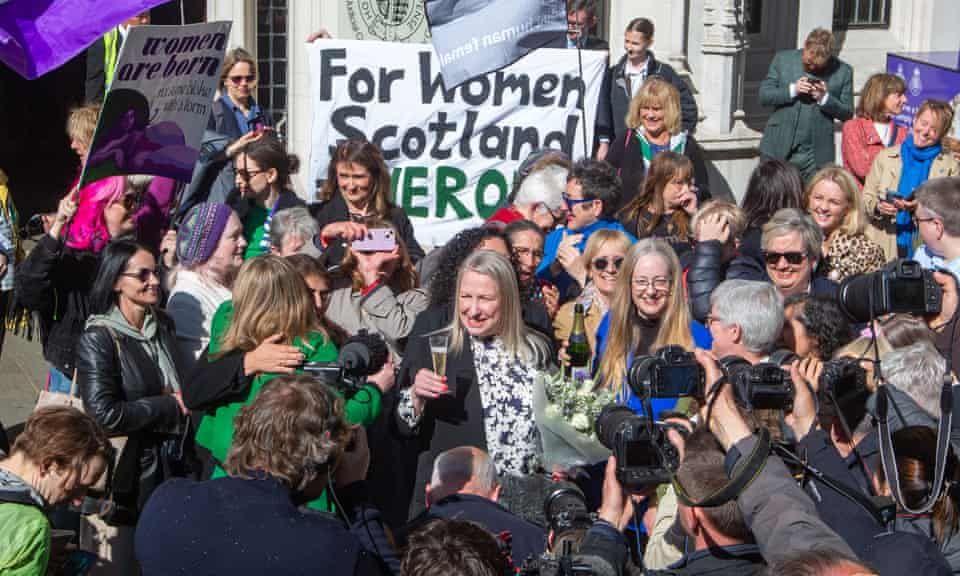
One notable financial supporter of the case was notoriously transphobic author J.K. Rowling, who donated £70,000 to the legal challenge (PinkNews, 2024).

The central question was whether “sex” should be defined solely as biological sex, excluding gender identity. Many viewed the decision as a setback for transgender rights, triggering widespread public debate and confusion (The Guardian, 2025).
This article explains the current legal framework for washroom access in the UK following the court’s decision.
Definition of Sex in UK Law
The UK Supreme Court ruled that “sex” refers specifically to biological sex assigned at birth, excluding gender identity. This interpretation directly affects how single-sex services, facilities, and public spaces operate (The Guardian, 2025).
Impact on Transgender Individuals
Despite this ruling, transgender individuals remain protected under the Equality Act 2010. The Act continues to safeguard individuals undergoing or intending to undergo gender reassignment (EHRC – Gender reassignment discrimination). Providers may lawfully exclude transgender individuals from single-sex spaces only if exclusion is justified and proportionate. Such exclusions must serve legitimate aims, such as safeguarding privacy, safety, or dignity (EHRC Statutory Code of Practice).
Service Provider Rules
UK law does not explicitly dictate who can access specific washrooms. Instead, individual service providers set their own access policies within the legal framework of the Equality Act 2010 (Equality Act 2010 – legislation.gov.uk). Policies that limit access based on biological sex must be carefully justified. Restrictions must demonstrate proportionality and align with a legitimate aim (EHRC guidance on single-sex spaces).
Proportionality and Legitimate Aims
Exclusions based solely on gender identity, without clear justification, are unlawful under the Equality Act. Any restriction must pursue legitimate aims, including safeguarding safety, dignity, or privacy. Blanket bans on transgender individuals accessing facilities aligned with their gender identity remain unlawful (EHRC Statutory Code of Practice).
The UK’s Accountability under the Council of Europe and ECHR
As a signatory to the European Convention on Human Rights (ECHR), the UK remains accountable to the Council of Europe’s human rights framework. Article 8 of the ECHR guarantees the right to respect for private and family life, which extends to gender identity and personal autonomy (European Court of Human Rights – Guide on Article 8). Furthermore, Article 14 prohibits discrimination in the enjoyment of these rights. Any policy or practice that disproportionately affects transgender individuals’ access to essential services, such as washrooms, could be subject to challenge under the ECHR’s provisions. The European Court of Human Rights has historically upheld protections for gender minorities, reinforcing the need for UK policies to align with broader human rights obligations (Council of Europe – Sexual Orientation and Gender Identity Rights).
Practical Guidance for Providers
Service providers should:
- Regularly review and clearly define washroom access policies (EHRC guidance on single-sex spaces).
- Document and justify any restrictions to ensure legal compliance.
- Train staff to implement policies fairly and lawfully.
- Keep track of ECHR decisions related to the protection from discrimination on the basis of gender identity or sex.
Conclusion
The Supreme Court’s 2025 ruling clarified existing legal interpretations but did not replace established protections under the Equality Act. Organizations must navigate these guidelines thoughtfully, balancing legal compliance with respect for individual dignity and equality.
Rigid definitions of sex in human rights law can cause significant harm. They risk excluding individuals from essential services and undermine the inclusive principles at the heart of human rights protections. The UK’s obligations under the European Convention on Human Rights further require respect for gender diversity. True equality demands recognizing and respecting diverse gender identities so everyone can fully participate in society.
Disclaimer: This article makes use of AI generation and fact checking. It provides general legal information and does not constitute legal advice. For specific guidance about how this ruling impacts you or others, please consult a competent legal professional.
 Morgane Oger
Leave a comment