The recurring trans washroom moral panic isn’t about safety. it’s about fear. Canadian law and evidence tell a very different story.
The Myth That Won’t Die
Every few months, the same argument resurfaces in Canada: that allowing transgender people—often children—to access washrooms, change rooms, or other gendered spaces consistent with their gender identity poses a threat to safety or privacy. Almost without exception, these claims rely on hypothetical scenarios, imported U.S. culture-war anecdotes, or deeply held intuitions that are treated as evidence.
But Canadian law does not operate on hypotheticals. And public policy should not be driven by fear when evidence exists.
In Canada, trans inclusion in gendered spaces is not a novel social experiment. It is settled human rights law, grounded in decades of jurisprudence, provincial policy, and empirical evidence.
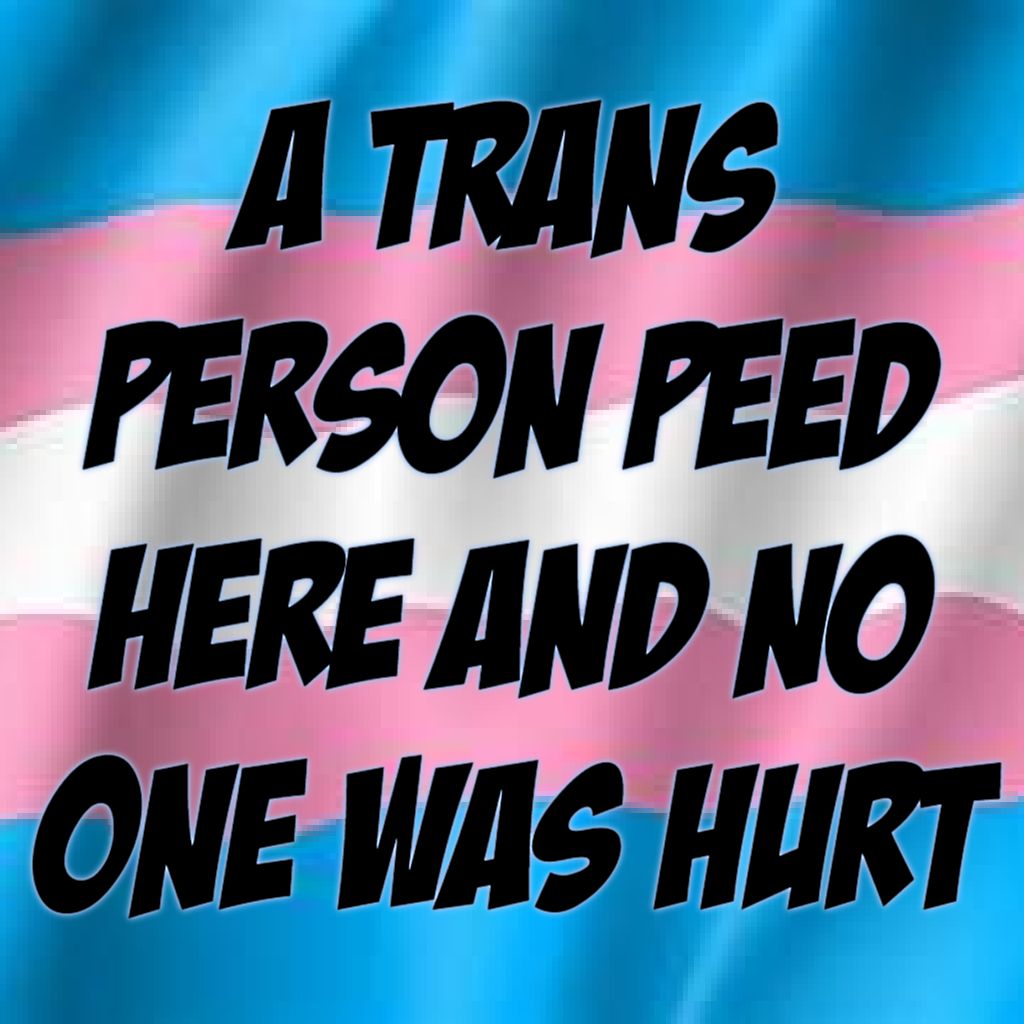
So why do some continue to argue against facts as they advocate for discrimination in defiance of facts and decades of Canadian values as they preserve and cultivate a deeply held bias? Why do we indulge those arguments at the expense of vulnerable youth in the name of free expression?
What Canadian Law Actually Says
Much of the confusion in public debate stems from a misunderstanding of Bill C-16. Enacted in 2017, Bill C-16 amended the Canadian Human Rights Act (CHRA) and the Criminal Code to explicitly add “gender identity or expression” as protected grounds.[^1]
Its scope is narrow and federal. The CHRA applies only to federally regulated sectors such as banks, airlines, telecommunications companies, Crown corporations, and the federal public service.[^2] It does not directly govern schools, municipal facilities, shelters, or provincially regulated workplaces.
Contrary to persistent claims, Bill C-16 did not create new criminal offences, did not regulate pronouns, and did not compel speech. The hate-propaganda provisions of the Criminal Code retain a high threshold—wilful promotion of hatred against an identifiable group—and there has never been a criminal prosecution in Canada for misgendering or pronoun misuse.[^3]
The federal Department of Justice has repeatedly clarified that Bill C-16 does not criminalize accidental or even deliberate pronoun misuse, and no court has held otherwise.[^4]
Where Canadians most often encounter these issues—schools, recreation centres, workplaces, shelters—the governing law is provincial human rights legislation, much of which protected transgender people before 2017. Ontario, British Columbia, Manitoba, and other provinces either explicitly added gender identity and expression years earlier or interpreted “sex” to include trans status through tribunal decisions.[^5]
Trans inclusion in gendered spaces is therefore not a federal imposition. It is the product of long-standing provincial law, human rights jurisprudence, and administrative policy.
Gendered Spaces Exist for Dignity, Not Exclusion
Washrooms and change rooms exist to protect privacy and dignity. That purpose is not undermined by trans inclusion—it is undermined by harassment, surveillance, and forced exclusion.
Canadian human rights commissions are explicit on this point. The Ontario Human Rights Commission states that individuals should be permitted to use facilities consistent with their lived gender identity, without being required to produce medical or legal documentation.[^6] The British Columbia Human Rights Commissioner and the Manitoba Human Rights Commission provide similar guidance.[^7]
These frameworks do not abolish privacy. They protect it. Facilities are encouraged to provide private or single-user options for anyone who wants them. What they do not permit is singling out trans people for exclusion as a condition of others’ comfort.
Human rights law draws a clear distinction between belief and conduct. Individuals are free to hold personal views about sex or gender. They are not free to deny services, harass others, or impose exclusionary conditions in public or employment settings based on protected characteristics.[^8]
The Evidence on Safety Is Clear—and One-Sided
The most frequently asserted claim against trans inclusion is that it creates safety risks. This claim has been studied repeatedly. It has not been substantiated.
Large-scale analyses by the UCLA Williams Institute examining jurisdictions with trans-inclusive bathroom and locker-room policies found no increase in sexual assault, voyeurism, or public-safety incidents following inclusion.[^9] A peer-reviewed study of Massachusetts public accommodations law similarly found no correlation between inclusive policies and crime rates.[^10]
By contrast, the harms of exclusion are well documented. Surveys consistently show that transgender people experience disproportionately high rates of harassment, denial of access, and assault in public facilities. In the U.S. Transgender Survey, nearly 70% of respondents reported avoiding restrooms due to fear, or experiencing harassment or assault.[^11] Canadian research shows comparable vulnerability, particularly among trans youth.[^12]
Even complaint-based evidence does not support the panic narrative. In England, a review of hundreds of public bodies over several years identified only four complaints related to trans women in single-sex spaces.[^13] This suggests that objections are driven by a vocal minority rather than widespread harm.
Public policy should be evidence-responsive. When alleged harms fail to materialize after years of real-world application, the responsible response is to update beliefs—not escalate fear.
Predation Myths and the Misuse of Attraction
One of the most revealing arguments against trans inclusion is the fixation on attraction—specifically, the suggestion that trans women present a unique sexual risk in women’s spaces.
This argument collapses under minimal scrutiny.
Population data shows that cisgender women who identify as lesbian or bisexual constitute approximately 4–5% of the female population.[^14] Trans women, by contrast, represent roughly 0.3% of adults overall.[^15] Surveys indicate diverse sexual orientations among trans women, with many attracted to men, many bisexual, and some attracted to women.[^16]
Even if every trans woman were attracted to women—which they are not—cis women attracted to women would still vastly outnumber them. Yet no one argues that lesbian or bisexual women pose an inherent risk in women’s spaces.
That is because attraction is not predictive of misconduct. Behaviour is.
Canadian law rejects identity-based assumptions of risk. Sexual violence is addressed through criminal law, consent standards, and conduct-based enforcement—not through exclusion of entire classes of people based on who they are.
Courts and Tribunals: What Actually Gets Sanctioned
Another persistent myth is that people are punished merely for expressing disagreement or making mistakes.
The legal record shows otherwise.
Human rights tribunals address misgendering almost exclusively in employment or service contexts, and only where conduct is deliberate, persistent, and demeaning. Remedies are civil and proportionate: cease-and-desist orders, training requirements, and modest damages.[^17] There is no criminal sanction.
Canadian courts have repeatedly upheld careful balancing between equality rights and freedom of expression under the Charter of Rights and Freedoms, permitting limits only where demonstrably justified under section 1.[^18]
Courts have also upheld narrow exemptions for certain sex-segregated services, such as specific women’s shelters serving highly vulnerable populations, where exclusion can be justified on a contextual and evidentiary basis.[^19] These decisions do not support blanket exclusion of trans people from gendered spaces. They support case-by-case analysis.
Exclusion Is No One A Remedy For Discomfort
A pluralistic society does not resolve discomfort by ejecting minorities. This is a debate that resurfaces whenever a minority group grows to be large enough for the majority to begin to consider their existence.
Canadian human rights guidance is clear on exclusion: if someone feels uncomfortable in a shared facility, the appropriate response is accommodation for that person and not exclusion of anyone else.
This may include access to a private change area, a single-user washroom, or scheduling accommodations but it never includes rejecting a person who is more-vulnerable because of someone else’s preferences.[^20]
These measures protect dignity for everyone and comply with Canada’s modern human rights law. What they do not do is treat trans people as a problem to be managed or removed.
Human rights law has always recognized that the burden of accommodation cannot fall solely on marginalized individuals. Inclusion, not segregation, is the default in Canada and it needs to remain so.
Why This Debate Persists
Given the clarity of the law and the consistency of the evidence, the persistence of this debate is not driven by uncertainty. It is driven by politics.
Trans people, and in particular especially trans youth and trans women and nonbinary persons, have become symbolic proxies for broader anxieties about social change.
The language of safety is invoked not because evidence demands it, but because fear is persuasive and because organizers know triggering fear is much easier than triggering empathy.
Once fear is normalized, it is self-amplifying and facts are treated as optional.
Human rights exist precisely to protect minorities when public sentiment turns against them.
Human Rights are not contingent on comfort, on popularity, or on moral panic. Human Rights are society’s dyke that keeps us from the flood of amygdala -triggered harm.
Evidence Has a Direction
Canada has chosen a path grounded in law, dignity, and evidence. Trans inclusion in gendered spaces is lawful. It is safe. And it is necessary.
Complaints are rare. Harms from exclusion are not. Courts have been clear. Human rights commissions have been clear. The data has been clear for years.
Continuing to argue against facts is no longer skepticism. It is the defense of bias.
We do not build a just society by indulging fear at the expense of children or vulnerable persons. In fact this concept applies to vulnerable persons in Canada. Here in Canada. We build this just society by defending evidence, enforcing law, and refusing to let discomfort masquerade as principle to undermine justice.
Footnotes
**[1] An Act to amend the Canadian Human Rights Act and the Criminal Code, S.C. 2017, c. 13** (Bill C-16 full text): https://laws-lois.justice.gc.ca/eng/annualstatutes/2017_13/FullText.html (Official consolidated version from the Department of Justice Canada.)
–
**[2] Canadian Human Rights Act, R.S.C. 1985, c. H-6, ss. 2–3** (sections on purpose and prohibited grounds): https://laws-lois.justice.gc.ca/eng/acts/H-6/FullText.html (Full Act; ss. 2 and 3 are in the opening sections.) –
**[3] Criminal Code, R.S.C. 1985, c. C-46, ss. 318–319** (hate propaganda provisions): https://laws-lois.justice.gc.ca/eng/acts/C-46/section-318.html (s. 318) and https://laws-lois.justice.gc.ca/eng/acts/C-46/section-319.html (s. 319). –
**[4] Department of Justice Canada, “Gender Identity and Expression – Canadian Human Rights Act,” backgrounder (2017–2018)**: https://www.justice.gc.ca/eng/csj-sjc/pl/identity-identite/statement-enonce.html (Related Charter statement and explanatory materials; the core 2017 backgrounder/FAQ is archived at https://www.justice.gc.ca/eng/csj-sjc/pl/identity-identite/faq.html.) –
**[5] Dawson v. Vancouver Police Board (No. 2), 2015 BCHRT 54**: https://www.canlii.org/en/bc/bchrt/doc/2015/2015bchrt54/2015bchrt54.html (Full decision on CanLII.) –
**[6] Ontario Human Rights Commission, Policy on preventing discrimination because of gender identity and gender expression (2014)**: https://www.ohrc.on.ca/en/policy-preventing-discrimination-because-gender-identity-and-gender-expression (Full policy document.) –
**[7] British Columbia Human Rights Commissioner, Transgender People and the Law; Manitoba Human Rights Commission, Gender Identity and Gender Expression**: – BC: No standalone “Transgender People and the Law” document from the Commissioner exists in current searches; related resources are at https://bchumanrights.ca/ (general site) or older tribunal guidelines. – Manitoba: Guideline on gender identity/expression: https://www.manitobahumanrights.ca/education/pdf/guidelines/guideline_genderid.pdf (Commission interpretation under the Code). –
**[8] R. v. Whatcott, 2013 SCC 11** (balancing expression and equality): https://www.canlii.org/en/ca/scc/doc/2013/2013scc11/2013scc11.html (Full Supreme Court judgment.) –
**[9] UCLA Williams Institute, Gender Identity Nondiscrimination Laws in Public Accommodations (2018)**: https://williamsinstitute.law.ucla.edu/publications/ma-public-accommodations/ (Report overview and links to full study.) –
**[10] Hasenbush, M., Flores, A., Herman, J., Sexuality Research and Social Policy (2019)**: https://link.springer.com/article/10.1007/s13178-018-0335-z (Full article: “Gender Identity Nondiscrimination Laws in Public Accommodations: a Review of Evidence Regarding Safety and Privacy…”). –
**[11] James, S. et al., U.S. Transgender Survey (National Center for Transgender Equality, 2016)**: https://transequality.org/sites/default/files/docs/usts/USTS-Full-Report-Dec17.pdf (Full report PDF.) –
**[12] Veale, J. et al., Canadian Trans Youth Health Survey (2019)**: https://www.saravyc.ubc.ca/our-research/ctyhs/ (Project site with reports; 2019 wave data available via linked publications.) –
**[13] UK Equality and Human Rights Commission, FOI responses summarized in 2021–2022 reviews**: No single centralized document; summaries appear in EHRC reports and reviews (e.g., via archived FOI disclosures on transgender policy impacts). Search EHRC site: https://www.equalityhumanrights.com/. –
**[14] Statistics Canada, Sexual orientation of Canadians (2021 Census)**: https://www12.statcan.gc.ca/census-recensement/2021/as-sa/98-200-X/2021010/98-200-X2021010-eng.cfm (2021 data release.) –
**[15] Statistics Canada, Gender diversity and transgender population estimates (2022)**: https://www150.statcan.gc.ca/n1/daily-quotidien/220427/dq220427b-eng.htm (2022 release on gender diversity.) –
**[16] Grant, J. et al., Injustice at Every Turn (2011)**: https://transequality.org/sites/default/files/docs/resources/NTDS_Report.pdf (Full U.S. transgender discrimination survey PDF.) –
**[17] Nelson v. Goodberry Restaurant Group Ltd., 2021 BCHRT 137**: https://www.canlii.org/en/bc/bchrt/doc/2021/2021bchrt137/2021bchrt137.html (Full decision on deliberate misgendering as discrimination.) –
**[18] R. v. Keegstra, [1990] 3 SCR 697; Saskatchewan (Human Rights Commission) v. Whatcott, 2013 SCC 11**: – Keegstra: https://scc-csc.lexum.com/scc-csc/scc-csc/en/item/681/index.do – Whatcott: As above in [8]. –
**[19] Vancouver Rape Relief Society v. Nixon, 2005 BCCA 601**: https://www.canlii.org/en/bc/bcca/doc/2005/2005bcca601/2005bcca601.html (Full decision.) –
**[20] Ontario Human Rights Commission, Policy on competing human rights (2012)**: https://www.ohrc.on.ca/en/policy-competing-human-rights (Full policy.)
Note: These links point to the most current, official versions available. Some older documents may be archived, but the provided URLs host the primary texts or decisions. If a link requires access (e.g., paywalled academic articles), abstracts or summaries are often free.
 Morgane Oger
Leave a comment