Background
Between 2017 and 2022, while serving as an elected trustee on the Chilliwack Board of Education, Barry Neufeld mounted a sustained public campaign against SOGI 1 2 3 and against the broader recognition of sexual orientation and gender identity in public schools.
Through Facebook posts, media interviews, public rallies, and statements at board meetings, he characterized SOGI as a “weapon of propaganda,” described gender identity as a “biologically absurd theory,” and asserted that affirming trans youth amounted to child abuse . He repeatedly framed LGBTQ-inclusive education as a threat to children, suggested that teachers were “grooming” students, and implied that LGBTQ educators were connected to sexual misconduct. Although presented as opposition to policy, his rhetoric directly referenced teachers, public schools, and the work being carried out within the district he governed.
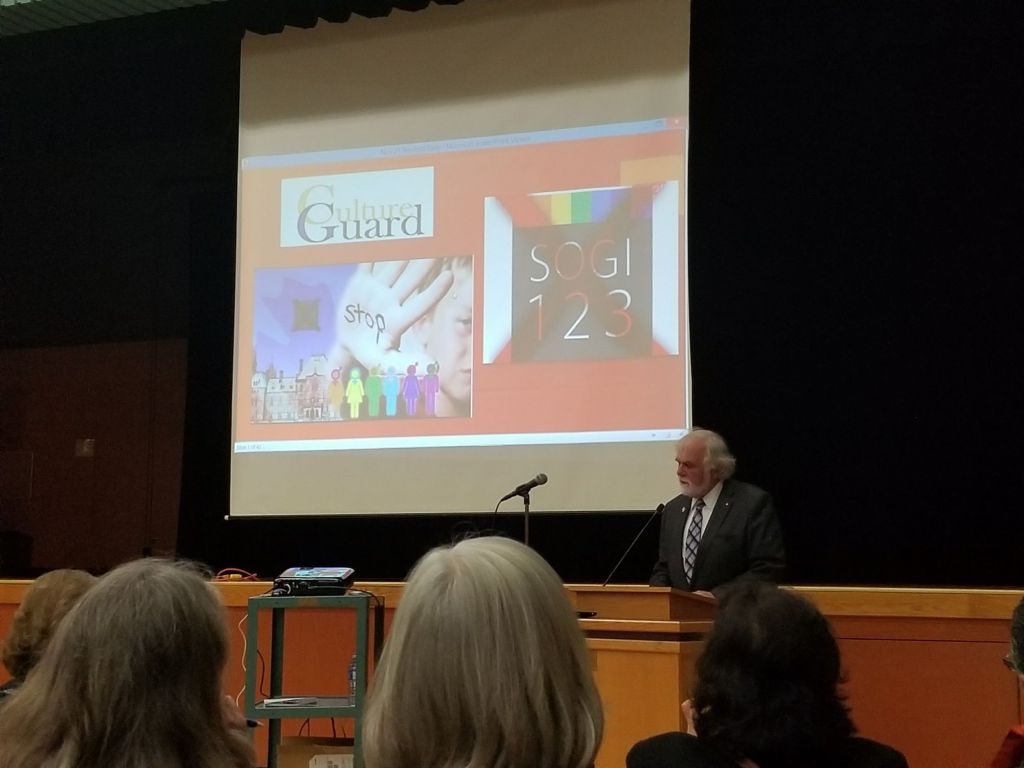
The complaint arose because this messaging did not occur in a vacuum. As a trustee, Neufeld was part of the governing body that employed the teachers affected by his statements. The Tribunal found that his persistent public denigration of LGBTQ identities and association of inclusive education with predation and abuse permeated the school environment and contributed to a poisoned workplace for LGBTQ teachers . The issue was not merely disagreement over curriculum, but the cumulative effect of rhetoric that undermined the dignity, safety, and equal standing of LGBTQ educators within the very institution he was elected to oversee.
The decision
On February 18, 2026, the British Columbia Human Rights Tribunal released its decision in the 10th ruling of the case. The ruling is one of the most significant Canadian decisions in recent years on the intersection of freedom of expression, hate speech, and discrimination in employment. It is also a landmark in the ongoing public debate about gender identity, public education, and the limits of political rhetoric.
At its core, the case asked a difficult question: when does public speech about a controversial issue cross the line from protected political expression into unlawful discrimination?
The Legal Framework
The complaint arose from years of public statements by then–Chilliwack school trustee Barry Neufeld opposing SOGI 1 2 3, a provincial initiative intended to foster inclusive school environments for LGBTQ students. The Chilliwack Teachers’ Association, on behalf of LGBTQ teachers, alleged that his rhetoric violated three provisions of the BC Human Rights Code:
- Section 13 (discrimination in employment),
- Section 7(1)(b) (hate speech), and
- Section 7(1)(a) (discriminatory publications).
The Tribunal upheld the complaint in part. It found that:
- Neufeld’s conduct created a discriminatory work environment for LGBTQ teachers;
- Six of his publications met the high legal threshold for hate speech; and
- Twenty-four publications indicated discrimination or an intention to discriminate in public education.
At the same time, the Tribunal dismissed other allegations, concluding that not all impugned statements met the threshold for hate speech or unlawful discriminatory publication. That restraint is important: the decision does not collapse political disagreement into illegality.
Instead, it carefully applies established Supreme Court jurisprudence — particularly Whatcott, Ward, Hansman, and Schrenk — to the facts before it.
Why It Matters
There are three reasons this decision matters nationally.
1. It Clarifies That Public Officials Cannot Poison Workplaces Through External Speech
The Tribunal found a sufficient connection between Neufeld’s public rhetoric and the teachers’ employment. Drawing on Schrenk, it emphasized that discrimination in employment is not limited to conduct occurring physically in the workplace or carried out by a direct supervisor. A workplace can be “poisoned” by speech that permeates it.
That is a major clarification. Public officials — trustees, councillors, MLAs — cannot assume that statements made on Facebook, at rallies, or in interviews are legally insulated from employment consequences simply because they occur “off-duty.”
When those statements denigrate protected groups within their jurisdiction — especially groups over whom they exercise authority — the connection to employment may be legally sufficient.
This shifts the risk calculus for elected officials. Speech that fuels hostility toward employees can now clearly ground liability.
2. It Reaffirms the High Threshold for Hate Speech And Applies It
The Tribunal reaffirmed that hate speech requires exposure to “detestation and vilification,” not merely offense. Thirteen of the impugned statements did not meet that threshold. Six did.
This is not a trivial distinction. The Tribunal explicitly preserved space for heated debate on public policy. It acknowledged that SOGI and gender-affirming care are subjects of public discussion.
But it drew a constitutional line where rhetoric:
- Casts LGBTQ people as predators or threats to children;
- Denies the existence or legitimacy of trans people;
- Associates them with criminality or moral corruption; and
- Encourages their exclusion from public institutions.
In doing so, the decision aligns with Supreme Court reasoning that hate speech law protects the “equal standing” of vulnerable groups in public life. The Tribunal did not criminalize disagreement. It targeted dehumanizing narratives that generate social exclusion.
That distinction will be central in future cases.
3. It Signals a New Standard for Public Communications
Perhaps the most immediate impact will be on public communications in Canada.
Political actors have increasingly framed attacks on trans inclusion as opposition to “gender ideology” rather than people. The Tribunal directly addressed this rhetorical move, characterizing it as a form of existential denial when it functions to erase the reality of trans identities.
This is a doctrinal development. It recognizes that speech can be discriminatory even when framed as criticism of “ideas” if, in substance, it denies the existence or dignity of protected groups.
That analysis will influence:
- School boards,
- Municipal councils,
- Provincial legislatures,
- Professional regulators, and
- Public agencies drafting codes of conduct.
Legal advisors will now warn clients that rhetoric equating LGBTQ people with child abuse, grooming, or social contagion carries measurable legal risk — particularly when directed at environments where those individuals work.
The Broader Constitutional Balance
The decision engages the Doré/Loyola framework for balancing Charter values within administrative decision-making. It did not treat freedom of expression as irrelevant. It treated it as engaged — and then balanced it against the statutory objective of maintaining discrimination-free workplaces and protecting equal participation.
This is consistent with Canada’s constitutional architecture. Freedom of expression is fundamental, but it is not absolute. Where speech undermines the equal dignity and security of protected groups, legislatures have the authority — and arguably the obligation — to intervene proportionately.
The Tribunal’s partial dismissal of some claims reinforces that proportionality.
What It Will Change
In practical terms, the decision will likely produce:
- Stronger social media policies for elected officials.
- More careful language around trans issues in institutional settings.
- Increased human rights complaints where public rhetoric targets employees in regulated environments.
- Clearer advisory guidance from ministries and professional bodies.
It will also shape future litigation involving school boards and anti-trans campaigns in other provinces.
The ruling does not end political debate about gender identity. It does not mandate agreement. It does not prohibit criticism of public policy.
But it does draw a boundary: public discourse that casts LGBTQ people as dangerous, deceptive, or illegitimate — especially in environments where they live and work — is not simply “robust debate.” It can constitute discrimination.
The Enduring Message
Ultimately, CTA v. Neufeld (No. 10) reinforces a principle embedded in Canadian human rights law for decades: equality in public life requires more than formal inclusion. It requires protection from rhetoric that systematically undermines one’s safety, dignity, and capacity to participate.
Public communication in Canada will continue to be contentious. But after this decision, one thing is clearer: when speech from positions of authority creates real-world harm for protected groups, it carries legal consequences.
That is not censorship.
It is the rule of law operating in a pluralistic democracy.
Now, let’s pause for a moment while the outrage machine finishes fundraising off such issues by sow panic through deception.
 Morgane Oger
Leave a comment